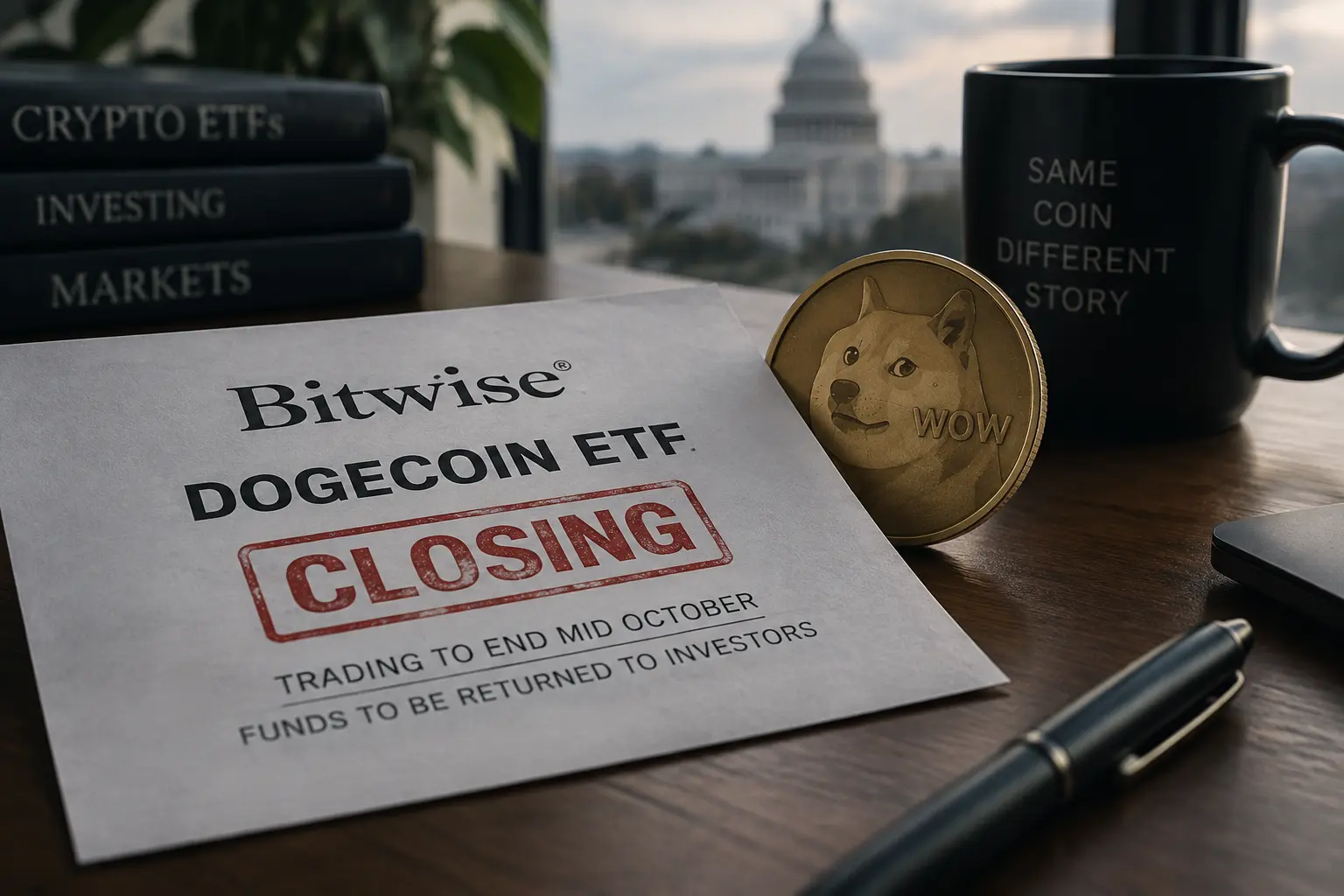
The Bitwise Dogecoin ETF Closure isn’t really a story about dogecoin. It reads more like a warning label for the wave of new crypto funds now hitting US exchanges. Bitwise will stop trading the fund in mid October and return whatever cash is left inside it. Regulators never stood in the way; almost nobody ever showed up to trade it.
What the Bitwise Dogecoin ETF Closure Actually Reveals
Numbers tell the real story here. Assets in the fund, ticker BWOW, sat at roughly $722,000 by early September, covering about 8.2 million dogecoin tokens. That’s a sliver of what some of the best bitcoin ETFs in Canada manage today. Trading volume across the three US dogecoin ETFs stayed near $300 million total, well behind what other coins pulled in.
Getting a crypto fund approved used to take up to 240 days of SEC review, one filing at a time. That changed last year once regulators approved generic listing standards for crypto funds, cutting the timeline to around 75 days. Issuers no longer needed a bespoke rule change for every coin they wanted to wrap. So dogecoin got its shot alongside dozens of tokens that never had a fund proposed for them before.
Regulators Cleared the Path, But Demand Never Followed
Across 199 trading days, the three US dogecoin ETFs posted zero net flows on 166 of them. That’s 83 percent of the fund’s entire life spent with nobody buying and nobody selling in any meaningful size. Only 28 days saw positive inflows, and just five saw outflows worth mentioning. Even the first trading day, usually the loudest moment for any new fund, only pulled in about $3 million.
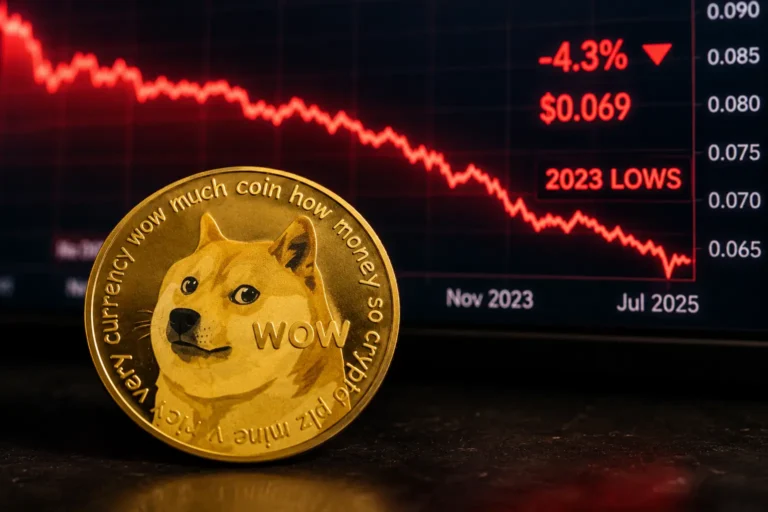
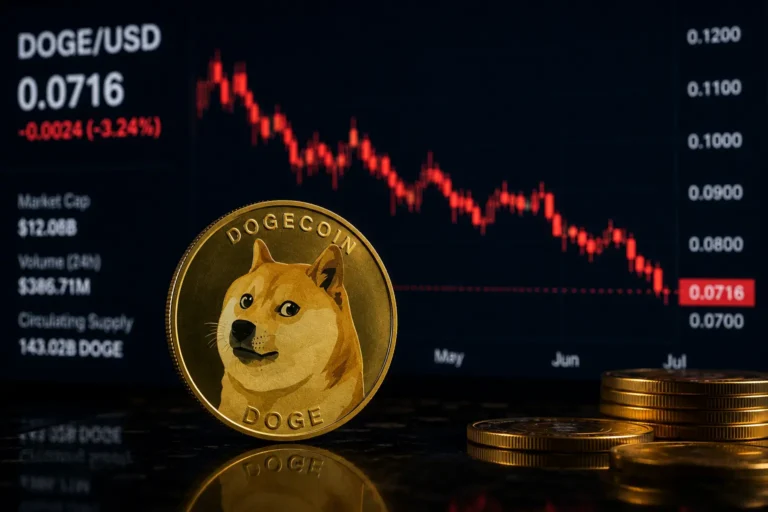
Retail traders pushed dogecoin to a $13 billion market cap almost entirely on momentum and internet culture. That same energy showed up when a meme coin trolled political token buyers earlier this month. Still, that kind of interest rarely turns into people paying an annual fee for exposure. Most would rather hold the token in a wallet they already control.
Why the Bitwise Dogecoin ETF Closure Comes Down to Simple Math
An 0.34 percent expense ratio sounds small until it’s measured against $722,000 in assets. That works out to under $2,500 a year in fee revenue. It doesn’t come close to covering a custodian, an administrator, an auditor, and the fund’s listing fees. Grayscale’s competing dogecoin product wasn’t doing much better, holding around $8.7 million of its own.
Canadian investors already have a working template for what a functional crypto ETF looks like. Options built around Bitcoin ETF Canada products have stuck around for years inside TFSA and RRSP accounts. That staying power comes down to bitcoin carrying an institutional thesis beyond price momentum. Dogecoin, for all its cultural popularity, never built that same case for allocators sitting on compliance committees.
Dogecoin the Asset Isn’t the Same as Dogecoin the Wrapper
Dogecoin itself isn’t finished; the token still trades with a market cap north of $13 billion. Nothing about the Bitwise Dogecoin ETF Closure changes who holds it or why. What failed was the wrapper, not the asset underneath it. Direct ownership costs nothing beyond a wallet, so a management fee for exposure many holders already have made little sense.
Other newly approved funds found a story that survives compliance review even without huge trading volume. Zcash leaned on privacy upgrades, Hyperliquid pointed to real protocol revenue, and XRP had a finished SEC settlement behind it. Dogecoin brought popularity and not much else. Popularity alone rarely satisfies an investment committee.
What the Bitwise Dogecoin ETF Closure Means for the Next Hundred Funds
More than a hundred new crypto ETFs are reportedly in the pipeline now that listing got easier. Cheaper launches mean issuers can afford to test demand for coins that would never have justified the old approval process. Some of those bets will land. Most, if the dogecoin experience holds up, probably won’t.
That’s not necessarily bad news for the market as a whole. A faster approval path lets genuinely useful products reach investors sooner. It also produces a longer list of funds that quietly wind down within a year. The Bitwise Dogecoin ETF Closure just happens to be the clearest early example of that tradeoff playing out in public.
What the Bitwise Dogecoin ETF Closure Means for Canadian Investors
For anyone north of the border, the lesson isn’t about dogecoin specifically. It’s about checking whether a fund has genuine trading volume and a real institutional case. A regulated wrapper only adds value when enough other people are using it too. A low fee never makes up for a fund with nobody left inside it.
So the real question isn’t whether regulators keep approving new crypto funds, because they clearly will. My take is that it’s whether investors start asking about actual demand before buying in. That question matters in Canada just as much as anywhere else. The Bitwise Dogecoin ETF Closure is simply the clearest example yet of what happens when nobody does.