
Bitcoin in Canada: A Practical Guide for Investors
Canada got to Bitcoin early. The world’s first Bitcoin ATM went live in a Vancouver coffee shop in October 2013, and in February 2021 the Purpose Bitcoin ETF (BTCC) became the first spot Bitcoin ETF anywhere, three years before Wall Street approved its own. Canada also lived through QuadrigaCX, the 2019 exchange collapse in which clients lost at least $169 million, according to the Ontario Securities Commission. Both sides of that history shape how Bitcoin is bought, held and regulated here today.
This hub collects our Bitcoin coverage and the basics a Canadian investor needs: where to buy, how ETFs fit into a TFSA or RRSP, what the CRA expects, and the risks that don’t show up in a price chart.
Latest Bitcoin news
Bitcoin
View all
Bitcoin US Dollar Correlation: A Weak 17% Threat
Every time the greenback flexes, crypto Twitter panics. However, the bitcoin US dollar correlation is far flimsier than most traders assume, and…

Bitcoin Quantum Computing Risk Finally Gets Real Money
Bitcoin quantum computing risk used to sound like a sci-fi footnote. Not anymore. VanEck’s Matthew Sigel says the community now grasps the…

AI Bitcoin Security Vulnerabilities Are Reshaping the Network’s Risk Map
Bitcoin was built to be boring on purpose. Its base layer moves slowly, gets picked apart by thousands of eyes, and rarely…
Bitcoin Gold Debasement Trade Signals a Bigger Move Is Coming
Bitcoin and gold just started moving like siblings. The 90-day Pearson correlation between the two assets hit an all-time high this week.…
Bitcoin Price Rally 2026: BTC Tops $77,000 in Its Best Week Since 2023
Bitcoin just had its strongest week in more than three years. The price touched a Friday high of $79,400 before settling near…
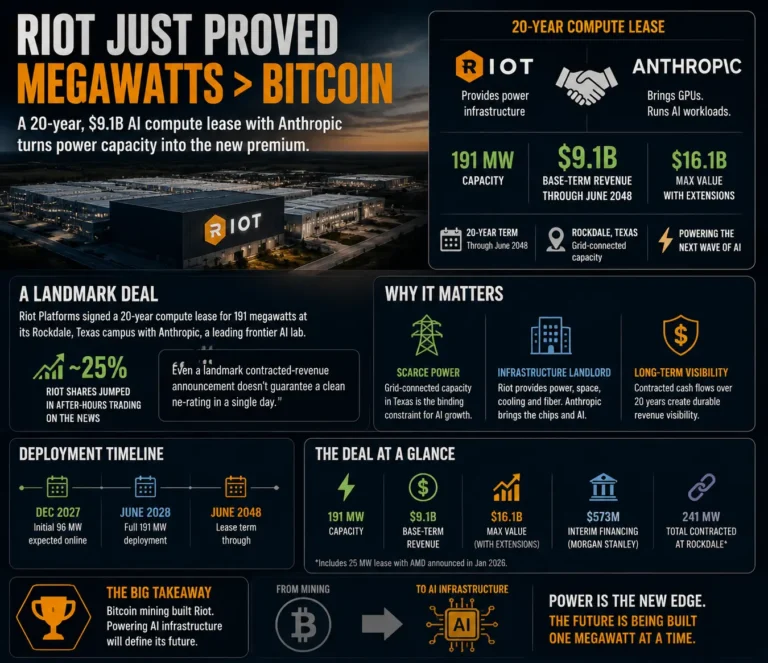
Riot Platforms Signs $9.1B Anthropic AI Lease — And It Changes What a Bitcoin Miner Is Worth
For years, Bitcoin mining companies were valued on a handful of variables: hash rate, energy cost per coin, balance sheet BTC holdings,…
Bitcoin in brief
Bitcoin launched in January 2009. Its supply is capped at 21 million coins, and new issuance halves roughly every four years. The most recent halving, in April 2024, cut the block reward to 3.125 BTC. No company or central bank runs the network: thousands of independent nodes check every transaction, and miners compete to add new blocks. Our plain-language explainer, What Is Bitcoin?, covers the mechanics in more depth.
Two ways to own Bitcoin in Canada
1. Buy the coin on a registered platform
Crypto trading platforms serving Canadians have to register with FINTRAC as money services businesses and with provincial securities regulators through the Canadian Securities Administrators (CSA). Several global names, Binance and Bybit among them, left the Canadian market in 2023 rather than meet those rules. Buying on a registered platform means KYC checks and CAD funding by Interac e-Transfer or wire, and it means a regulator to complain to if something goes wrong. Our guide to FINTRAC-registered exchanges compares fees, coin selection and custody arrangements.
2. Hold a spot Bitcoin ETF
Spot Bitcoin ETFs trade on the TSX like any other fund and can go inside a TFSA, RRSP or FHSA, which the coin itself can’t. The main options are Purpose (BTCC), CI Galaxy (BTCX), Evolve (EBIT) and Fidelity (FBTC). Management fees run from 0.32% on FBTC to 1.00% on BTCC, so the choice matters over a long hold. Our Bitcoin ETF guide for TFSAs and RRSPs lays out the fees, currency options and trade-offs side by side.
| Coin on a platform | Spot ETF | |
|---|---|---|
| TFSA / RRSP eligible | No | Yes |
| Trading hours | 24/7 | TSX market hours |
| Self-custody possible | Yes | No (fund holds the BTC) |
| Ongoing cost | Trading fees and spreads | Annual management fee |
| Tax records | Track your own ACB | Handled like any ETF; none inside a TFSA |
How the CRA taxes Bitcoin
The CRA treats Bitcoin as a commodity, not money. Selling it, swapping it for another coin or spending it is a disposition, and the gain or loss has to be reported. For most investors that’s a capital gain, with 50% of the gain included in taxable income. The federal plan to raise the inclusion rate to two-thirds on gains above $250,000 was cancelled in March 2025, so the 50% rate still applies to everyone. Frequent trading or mining can be treated as business income instead, which is fully taxable.
Reporting is about to get tighter. Canada’s version of the OECD Crypto-Asset Reporting Framework (CARF) takes effect on Jan. 1, 2027, after Budget 2025 pushed it back a year. From then on, platforms will send customer transaction data to the CRA. Our Canadian crypto tax guide walks through adjusted cost base, Schedule 3 and record-keeping.
Bitcoin mining in Canada
Cheap hydroelectric power and a cold climate made Quebec, Manitoba and British Columbia magnets for miners after China’s 2021 ban. The welcome has cooled since. Manitoba and B.C. both paused new crypto-mining power connections in late 2022, and Hydro-Québec now rations the electricity it allocates to the sector. Listed miners with Canadian operations are also exposed to U.S. trade policy, a story we covered in how tariffs are hitting Canadian Bitcoin miners.
Storing Bitcoin safely
Bitcoin transactions can’t be reversed, and QuadrigaCX showed what happens when a platform holds the keys and fails. Small amounts used for trading can reasonably sit on a registered platform. Anything held for years belongs in a hardware wallet, with the recovery phrase written down offline and never photographed. Our hot vs cold wallet guide explains the set-up, and the crypto scams guide covers the fraud patterns the Canadian Anti-Fraud Centre sees most often.
The risks
- Volatility. Bitcoin fell about 77% from its November 2021 peak to its November 2022 low. Drops of 20% to 30% within a few weeks are routine.
- Currency. Bitcoin is priced in U.S. dollars. A stronger loonie lowers CAD returns even when BTC is flat.
- Platform risk. Registration reduces it but doesn’t remove it. Custody arrangements are worth checking before depositing.
- Policy risk. U.S. legislation, central-bank decisions and tax changes regularly move the price. Our news section tracks them as they happen.
- Long-term technical risk. Quantum computing is years away from threatening Bitcoin’s cryptography, but research money is already flowing, as we reported in Bitcoin’s quantum computing risk.
Bitcoin in Canada: FAQ
Is Bitcoin legal in Canada?
Yes. Buying, holding and selling Bitcoin is legal. Platforms that serve Canadians must register with FINTRAC and provincial securities regulators.
Can Bitcoin go in a TFSA or RRSP?
The coin can’t, but TSX-listed spot Bitcoin ETFs can. Gains inside a TFSA are tax-free.
Is there tax on Bitcoin I’m only holding?
No. Tax applies when Bitcoin is sold, traded or spent, not while it sits in a wallet.
What is the capital gains inclusion rate on Bitcoin in 2026?
50%. The proposed increase to 66.67% on gains above $250,000 was cancelled in March 2025.
General information only, not investment or tax advice. Check fees, registration status and tax rules with the provider or a qualified professional before acting.