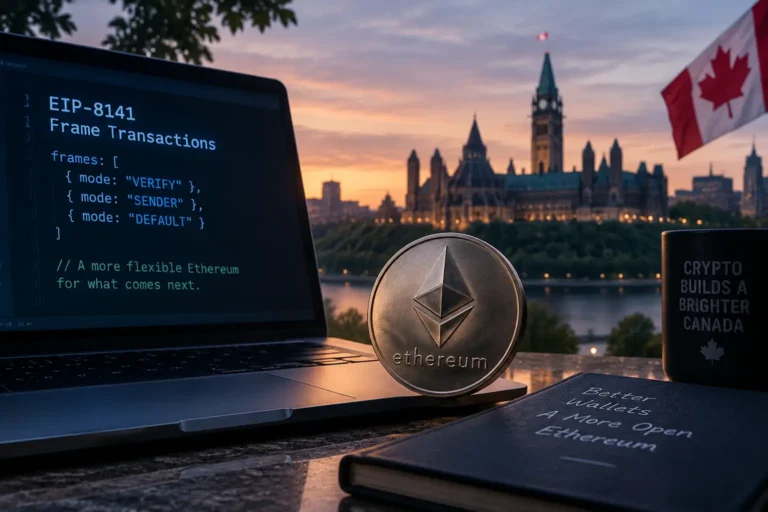

Ethereum Foundation board appointment news doesn’t usually make security researchers cheer. Still, this one did. The Foundation just added Pascal Caversaccio, co-founder of crypto emergency-response group SEAL 911, to its four-member governing board. It’s a small change on paper, but it says a lot about where Ethereum’s leadership wants to go next.
Who Is Pascal Caversaccio and Why He Matters
Caversaccio goes by “pcaversaccio” in Ethereum developer circles, and he’s been a fixture there for years. He co-founded SEAL 911, a volunteer team that responds to live crypto exploits in real time. The group launched in 2023. Since then, it has handled more than 3,300 support tickets and helped recover upwards of $180 million in stolen funds.
He’s also written extensively about Ethereum’s philosophical direction. For instance, his 2024 essay, The Ethereum Cypherpunk Manifesto, argued for stronger self-sovereignty. A 2025 follow-up focused specifically on privacy. Neither one reads like an academic exercise, and both line up closely with what the Foundation now says it wants to prioritize.
The Ethereum Foundation Board Appointment Explained
The Ethereum Foundation board appointment gives Caversaccio a one-year voluntary term. It also brings the board to four members total. There, he joins Foundation President Aya Miyaguchi, Ethereum co-founder Vitalik Buterin, and Swiss counsel Patrick Storchenegger.
Because the Foundation operates as a registered Stiftung in Zug, Switzerland, board members carry fiduciary duties under Swiss foundation law. That means Caversaccio now has formal authority to push back if a Foundation decision drifts from its mission. Our recent coverage of the Ethereum AI downstream trade touched on how much scrutiny Ethereum’s governance gets lately. This appointment adds another layer of accountability on top of that.
Why SEAL 911’s Track Record Matters Right Now
SEAL 911 launched in February 2023 after the Nomad bridge hack exposed a real problem. Ethical hackers wanted to help during live exploits, but they faced legal uncertainty for doing it. So the group built a rapid-response model instead. In practice, it assembles a war room, triages the vulnerability, and tries to recover funds before an attacker vanishes.
That kind of hands-on experience matters more than usual right now. Indeed, crypto hacks hit a record pace in the first half of 2026. Blockchain security firm Blockaid reported more than $1 billion lost to attackers during that stretch alone.
The Ethereum Foundation Board Appointment and the Privacy Push
This Ethereum Foundation board appointment lines up with a broader shift the group announced back in June. It called privacy and security “non-negotiable protocol guarantees” for the network going forward.
Part of that push includes preparing for a future where quantum computers could threaten blockchain cryptography altogether. Coinbase’s own advisory board has warned that the industry is running out of time to prepare, even though a capable machine likely remains years away.
Caversaccio’s dual background in incident response and privacy advocacy puts him in a useful position here. So he can help translate research into real protocol changes instead of leaving it stuck in whitepapers.
What the Ethereum Foundation Board Appointment Means for Canadian Holders
Canadian crypto holders don’t need to parse Swiss foundation law to care about this news. In practice, Ethereum’s governance choices ripple into custody standards, wallet security practices, and how quickly the ecosystem responds when something breaks.
Meanwhile, regulatory clarity remains a sore point here too. Our coverage of the Clarity Act crypto ban showed how far behind Canada still sits on framework decisions compared to the US.
A board that treats security as a first priority, rather than an afterthought, tends to produce networks that feel safer to hold. It also tends to attract builders who care about the same thing.
The Foundation didn’t announce a new security budget or program alongside this appointment. Instead, it put someone with real incident-response experience into a seat with actual fiduciary weight. That’s a quieter kind of signal, but it’s arguably a more honest one than a press release full of promises.
Still, Caversaccio’s term runs one year, unpaid, and voluntary. So whether it becomes a template for future board picks or stays a one-off gesture probably depends on what the Foundation does with privacy and post-quantum research next. That answer will likely take twelve months to arrive.
Worth watching whether other protocol foundations follow this playbook. After all, incident responders rarely get invited this close to the table.