
Canada crypto market growth is the odd result in a weak year for digital assets. Chainalysis says Canada’s crypto economy rose 2.3% to US$247.7 billion in the 12 months to June 2026, while the U.S. shrank 2.2%. My read is that this isn’t a speculative boom at all, but a payments story that runs mostly on American dollars.
Chainalysis published the figures in its annual North America report on Oct. 14. Across the region, crypto activity reached about US$3.02 trillion, down 1.9%, while the global crypto economy slipped 1.6%. Against that backdrop, Canada’s small gain stands out.
Where Canada Crypto Market Growth Ranks Globally
Size alone doesn’t explain the rankings. Chainalysis places Canada second in its big money index, which measures raw crypto activity, and 10th of 117 countries in its grassroots adoption index. On cross-border flows, Canada actually ranks first in the world in that unweighted big money index. That’s a remarkable spot for a country of roughly 41 million people.
Institutions play a part, too. Even Alberta’s pension fund took a stake in Strategy this spring, its first bitcoin-linked bet. Still, pension money moves slowly, and it isn’t what’s driving the headline numbers.
Remittances Power Canada Crypto Market Growth
Remittances are the real engine of Canada crypto market growth. Stablecoin and bitcoin transfers from Canada to India, China and the Philippines hit US$2.36 billion, up 141% from a year earlier. That covered 3.56 million transfers averaging US$663 each, from roughly 75,100 senders a month. Those aren’t whale trades; they look like rent, tuition and grocery money heading home.
Demographics explain why. In the 2021 census, 23.0% of the population were or had been landed immigrants or permanent residents. Morva Rohani of the Canadian Web3 Council says that’s the highest foreign-born share in the G7. Chainalysis also found domestic peer-to-peer volume has tracked the number of temporary visa holders from those three countries since 2021.
Cost does the rest. World Bank figures cited in the report put the average cost of sending money from Canada near 6.7%, while banks charge more than 7%. On a typical US$663 transfer, that’s roughly US$44 in fees. By contrast, a stablecoin transfer settles for pennies, although cashing out into rupees or pesos still costs something.
Combined, those three corridors now make up 19.4% of Canada’s outbound cross-border stablecoin value, up from 10.9% a year ago. In other words, their share nearly doubled in twelve months. Chainalysis also calls Canada the G7’s strongest peer-to-peer crypto economy, seventh globally for both domestic and cross-border flows.
Stablecoins Now Lead Canadian Dollar Trading
Stablecoins took 44% of Canadian dollar order book volume in June 2026, up from 30% a year earlier. That put them ahead of store-of-value assets like bitcoin, at 29%. USDC dominates the stablecoin slice. So the most traded category behind Canada crypto market growth is, essentially, a digital US dollar.
Canadian dollar alternatives exist, but they’re still tiny. Tetra’s CADD gained institutional custody through Anchorage Digital in May, and Visa Canada began a USDC settlement pilot with Wealthsimple that same month. Meanwhile, all six of Canada’s largest banks are exploring a shared tokenized deposit system in loonies.
Rules Could Reshape Canada Crypto Market Growth
Ottawa’s Stablecoin Act received royal assent on March 26, 2026, as part of Bill C-15. It gives the Bank of Canada a public registry of issuers, plus oversight of reserves and redemption. However, Finance Canada is still drafting the detailed regulations, and the full framework likely won’t run before 2027.
Once those rules land, a Canadian dollar coin finally gets a fair shot. Even then, it’ll need USDC’s liquidity and speed, not just a regulatory badge. Until that happens, families sending money home will keep picking whatever’s cheapest and fastest.
What Canada Crypto Market Growth Means for Investors
Choice on the investor side keeps widening. Canadians gained another registered on-ramp this year when Robinhood took over Bitbuy and Coinsquare. Newton, Ndax and Coinbase Canada are still competing for the same users.
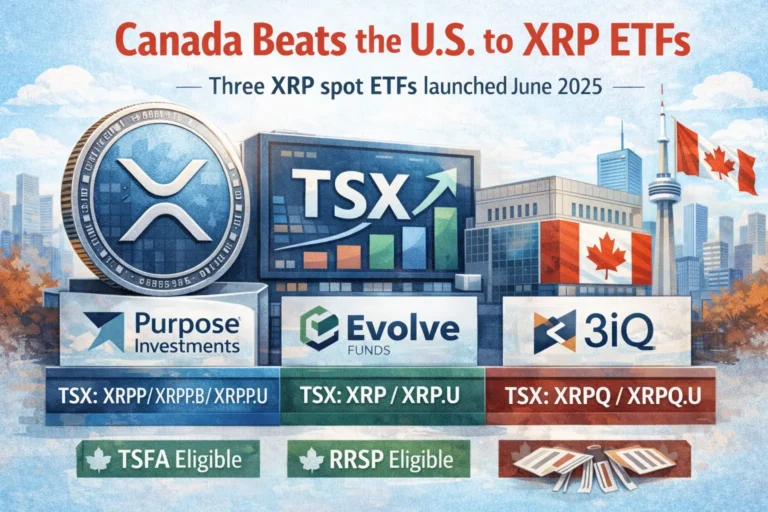
Funds keep feeding Canada crypto market growth as well. Purpose and Evolve run spot bitcoin ETFs on the TSX, and BlackRock Canada added IBQT in August, a portfolio fund with a 3% bitcoin sleeve. Few countries offer such an easy entry point.
Price action hasn’t cooperated, though. Bitcoin briefly slipped under US$80,000 last week, and traders now face a packed run of data before the Fed’s Oct. 28 decision. After all, more usage doesn’t guarantee gains in your account.
The Tax Catch Most Senders Miss
Here’s the part that rarely makes the headlines. Federal tax guidance for crypto-asset users says selling, trading, gifting or transferring ownership of crypto generally counts as a disposition. That can include a USDC transfer to a relative overseas.
A US dollar coin can still create a small gain or loss in Canadian dollar terms, because the exchange rate moves between purchase and transfer. Multiply that by 3.56 million transfers, and plenty of senders probably aren’t tracking it. So the paperwork problem is likely far bigger than the tax owed on any single payment.
I’d argue Canada crypto market growth now rests on the country’s most practical crypto use case yet. Still, it leans on immigration levels, US dollar rails and tax habits that could all change quickly. Fewer study permits would likely mean fewer senders, whatever bitcoin does next.
If you send money abroad, compare what your bank charges with a registered crypto platform, including cash-out fees on the other end. Keep a simple record of every transfer while you’re at it. Have you tried stablecoins for sending money home? Tell us how it went.