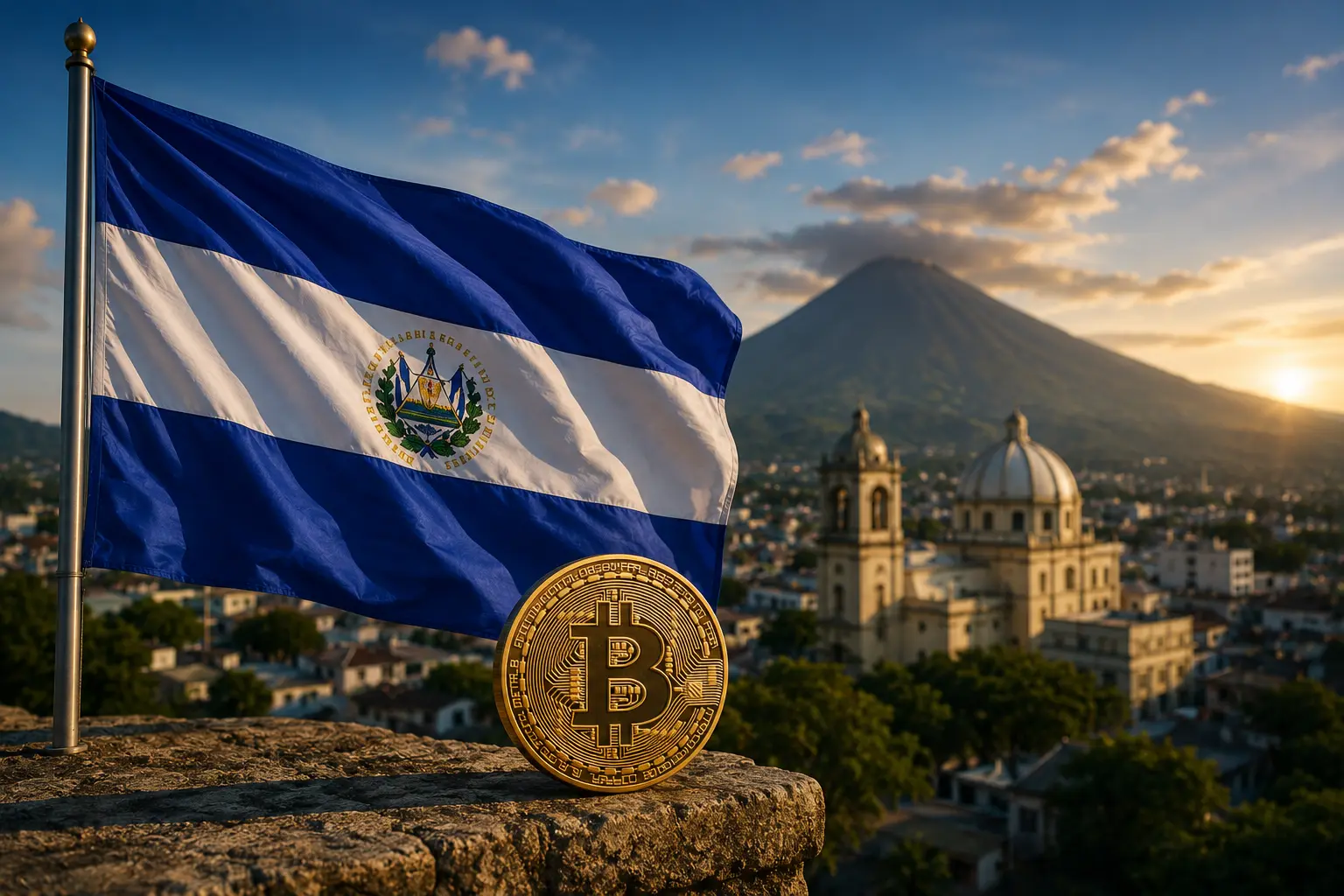
Five years ago, no nation had ever done what El Salvador did. On June 8, 2021, Congress voted 62 to 22 to pass the El Salvador Bitcoin Law. It granted Bitcoin legal tender status alongside the US dollar. Bold and polarising, it sparked global debate about running a country on decentralised currency.
Half a decade later, El Salvador is still in the game. And it’s still buying.
What the El Salvador Bitcoin Law Started and Where It Stands Today
As of June 2026, El Salvador holds 7,677 BTC in its national treasury, worth roughly $480 million USD. That’s not a rounding error or a lucky speculative bet. It’s the result of a disciplined, ongoing strategy that traces directly back to what the El Salvador Bitcoin Law set in motion.
Back in November 2022, President Nayib Bukele announced the country would buy one Bitcoin every single day. That dollar-cost averaging approach has continued steadily since. Over the 12 months leading up to June 2025 alone, El Salvador added more than 1,600 BTC to its holdings. One particularly aggressive week in November saw the government snap up over 1,000 BTC in a single tactical purchase during a market dip.
At the start of 2026, the country’s Bitcoin Office declared El Salvador was going “all in” on both Bitcoin and artificial intelligence. That’s a pretty clear signal of where government priorities sit, regardless of what’s happening on the international stage.
The IMF Deal Changed the Rules But Not the Conviction
Here’s where things get nuanced. In January 2025, El Salvador agreed to a $1.4 billion loan package with the International Monetary Fund. One of the conditions attached to that deal was rolling back the mandatory legal tender element of the El Salvador Bitcoin Law. Businesses are no longer legally required to accept BTC, and the government-run Chivo wallet, the centrepiece of Bukele’s original public pitch, is being wound down.
That sounds like a retreat, and critics were quick to say so. But the government hasn’t sold a single coin from its treasury. Not one. Bitcoin can still be freely used as a currency by anyone who chooses to — the change removes the legal obligation on businesses without banning the asset itself. It’s a pattern other nations are facing too as crypto regulation tightens globally.
So while the IMF deal softened the official policy stance, El Salvador’s Bitcoin conviction appears intact. You can strip the mandate without abandoning the mission.
Tax Policy Designed to Attract Bitcoin Investors
One area where El Salvador is actively doubling down is tax. As of 2026, the country charges zero capital gains tax on Bitcoin and cryptocurrency transactions. That’s official policy, reinforced in early 2026 specifically to draw in foreign investors and entrepreneurs looking for a crypto-friendly base. For anyone watching how national Bitcoin treasuries are being built, El Salvador’s approach stands out as one of the most aggressive anywhere in the world.
Beyond the tax angle, El Salvador has been developing plans for a “Volcano Bond,” a Bitcoin-backed financial instrument tied to the country’s geothermal energy resources. There’s also the proposed Bitcoin City project, a special economic zone powered by volcanic energy with no income tax, capital gains tax, or property tax. Timelines have shifted, but the concept is still being actively developed.
The El Salvador Bitcoin Law Remittance Promise Still Hasn’t Delivered
One thing that hasn’t gone to plan is the remittance argument. When Bukele sold the El Salvador Bitcoin Law to the public, a major selling point was that Bitcoin would slash the fees Salvadorans living abroad pay to send money home. Remittances are enormous for the country — personal transfers from overseas account for roughly 24% of GDP, with Q1 2026 alone totalling $2.43 billion.
Crypto’s share of that? Just $17.38 million, about 0.71% of the total. That gap is hard to ignore. Traditional remittance channels still dominate overwhelmingly, which suggests Bitcoin hasn’t cracked everyday financial infrastructure the way the original vision imagined. Economists studying digital currency in small open economies have flagged this as one of the biggest structural hurdles to real-world adoption.
That doesn’t make the whole experiment a failure, but it does raise honest questions about what Bitcoin adoption really looks like when it meets the friction of daily economic life for ordinary people.
Five Years On, a Complicated but Fascinating Case Study
El Salvador’s story is neither the triumphant revolution its advocates predicted nor the economic disaster its critics warned about. It’s something more interesting: a real-world experiment with messy results, ongoing commitment, and genuine unknowns still playing out.
Analysts tracking sovereign Bitcoin strategy have noted that El Salvador remains the most closely watched case study for any government considering a similar path. No other country has gone this far, held this long, or faced this much pressure while keeping its stack intact.
What’s clear is that El Salvador isn’t walking away from the El Salvador Bitcoin Law’s legacy. It’s still buying, still building, and still watching to see if its long bet pays off. Whether you think that’s visionary or reckless probably says a lot about your own views on Bitcoin’s future.
Want to stay on top of Bitcoin adoption news and crypto policy updates worldwide? Bookmark our site for daily coverage without the noise.