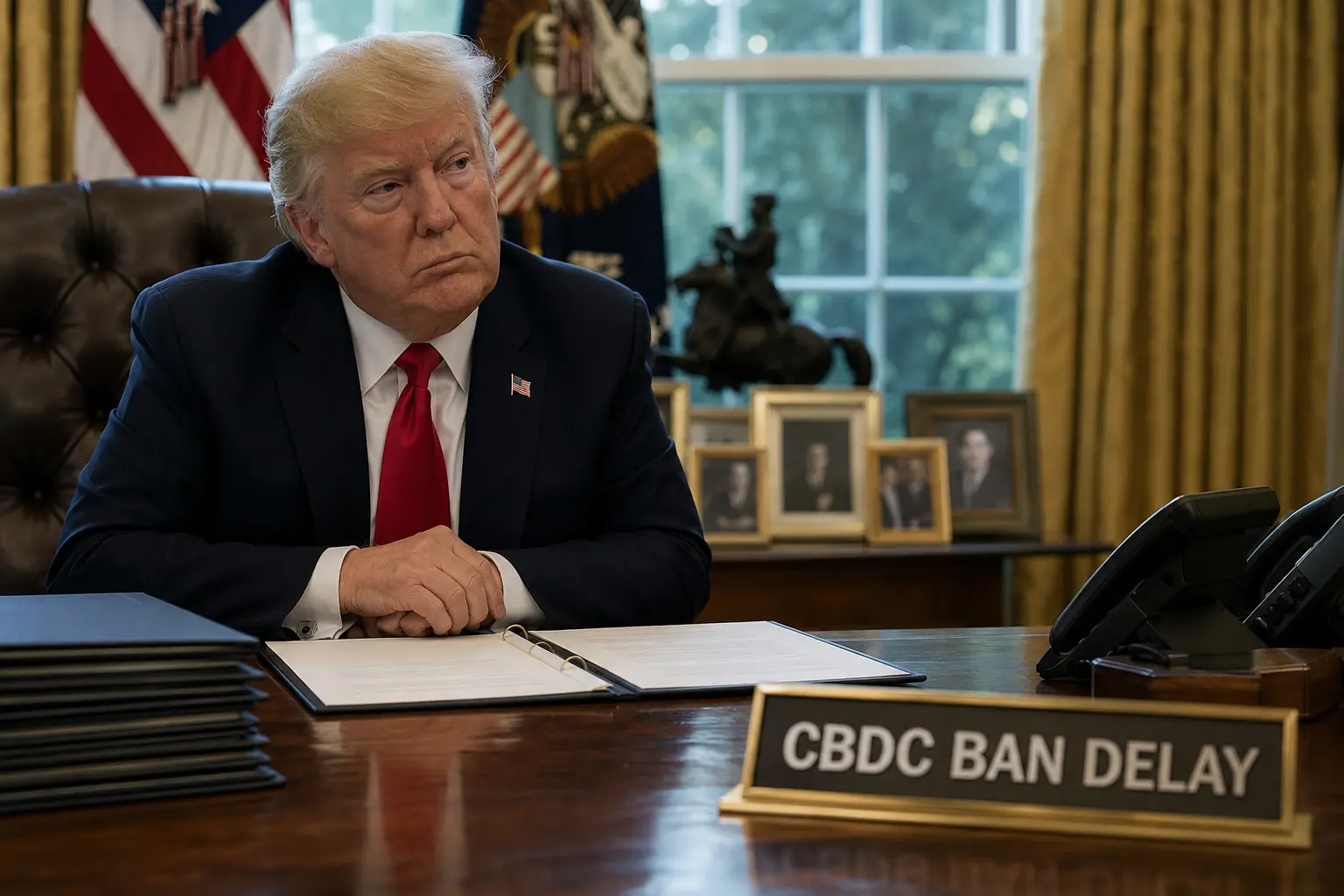
Everyone expected a rare bipartisan win on June 24, 2026. Trump cancelled a White House event to sign the 21st Century ROAD to Housing Act just hours before it was due to begin. He posted on Truth Social that the ceremony was “hereby cancelled until such time as we pass the desperately needed SAVE AMERICA ACT, which I consider to be a National Emergency.” The Trump CBDC ban delay caught lawmakers, the crypto industry, and housing advocates off guard in equal measure.
The housing bill had passed both chambers of Congress with enormous bipartisan support. The Senate approved it 85-5 and the House passed it 358-32, margins large enough to override a presidential veto. Yet a bill almost everyone in Washington agreed on had stalled in limbo.
What This Housing Bill Actually Puts at Risk
The 21st Century ROAD to Housing Act is primarily a response to America’s ongoing housing affordability crisis. Its provisions seek to speed up construction and cut regulatory barriers. There’s also new support for factory-built housing and tools to help local governments address supply shortfalls. One of its more politically prominent features would also limit large institutional investors from purchasing certain existing single-family homes.
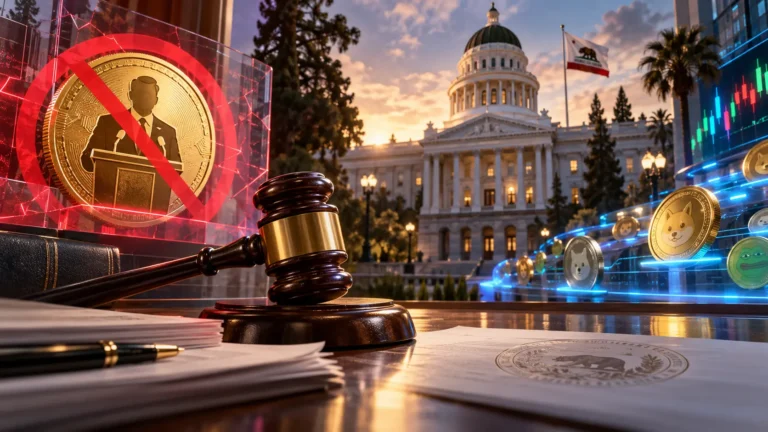
Buried inside the legislation is a significant digital currency provision. The bill would prohibit the Federal Reserve from creating a CBDC or any substantially similar digital asset through the end of 2030, while exempting certain dollar-denominated stablecoins that meet specified criteria. So private stablecoins stay untouched. Only a government-issued digital dollar faces the ban.
What’s Behind the Trump CBDC Ban Delay
Still, Trump’s reasoning had nothing to do with the housing provisions or the central bank digital currency ban itself. He wants Congress to pass the SAVE America Act first. That bill mandates citizenship verification for anyone registering to vote in federal elections. He described it as a national emergency and made his signature on the housing bill conditional on its passage.
The problem is that the SAVE America Act faces a very difficult path in the Senate. Democrats staunchly oppose it, arguing it would disenfranchise millions of eligible voters. A handful of Republicans have also indicated they wouldn’t back it, meaning it would fall short of the 60-vote threshold typically needed to advance legislation in the Senate. Trump and some allies have pushed for eliminating the filibuster to force the bill through, but Senate Majority Leader John Thune has shown no appetite for that move.
Why Trump Triggered the CBDC Ban Delay
Here’s the thing: this delay may not ultimately stop the ban from becoming law. Under longstanding rules, if the president does not sign a bill within 10 days while Congress is in session, excluding Sundays, the bill becomes law automatically. Even so, with both chambers having passed the housing act by veto-proof margins, the central bank digital currency ban will likely land on the books regardless. When asked directly whether he’d veto the bill, Trump told reporters he wasn’t signing it and wanted to “see what happens” with the SAVE America Act.
The CBDC provision also aligns with the administration’s existing stance on a federal digital dollar. Earlier this year, Trump signed an executive order directing federal agencies not to establish, issue, or promote a CBDC unless required by law. Treasury Secretary Scott Bessent followed up by declaring that a U.S. CBDC was “off the table.” The irony is that Trump’s own position on CBDCs is now being used as political leverage against him.
The Clarity Act Is the Biggest Casualty So Far
For the crypto industry, that secondary damage is arguably more pressing than the housing bill itself. The Digital Asset Market Clarity Act cleared the Senate Banking Committee 15-9 on May 14. It now sits on the Senate calendar, waiting for a floor vote before summer recess — roughly five weeks away.
Polymarket odds tell the story clearly. Odds for Clarity Act passage in 2026 have already fallen from approximately 74% to 42%. Any gridlock this standoff creates burns through the remaining time on the clock. The Clarity Act likely has only a handful of weeks left to get Senate approval, so any major delay could be a difficult obstacle. On top of that, Democrats are pushing for ethics-related provisions tied to Trump’s crypto ventures. White House adviser Patrick Witt has joined those discussions.
What to Watch as the Trump CBDC Ban Delay Plays Out
Two paths are worth tracking closely over the coming days. Congress could move to separate the Federal Reserve digital dollar ban from the housing bill and advance it as standalone legislation. Alternatively, Trump could simply allow the 10-day constitutional window to expire and let the housing act become law without his signature.
Watch for any congressional move to decouple the CBDC ban from the housing bill entirely. Also track whether the SAVE America Act clears Trump’s condition. Speaker Mike Johnson has already suggested folding it into a separate budget bill, which makes a standalone Senate path look unlikely. Washington had long treated a Federal Reserve digital dollar as politically toxic. Most people expected the ban to sail into law without a fight — and it still might, just not on the schedule anyone planned.