
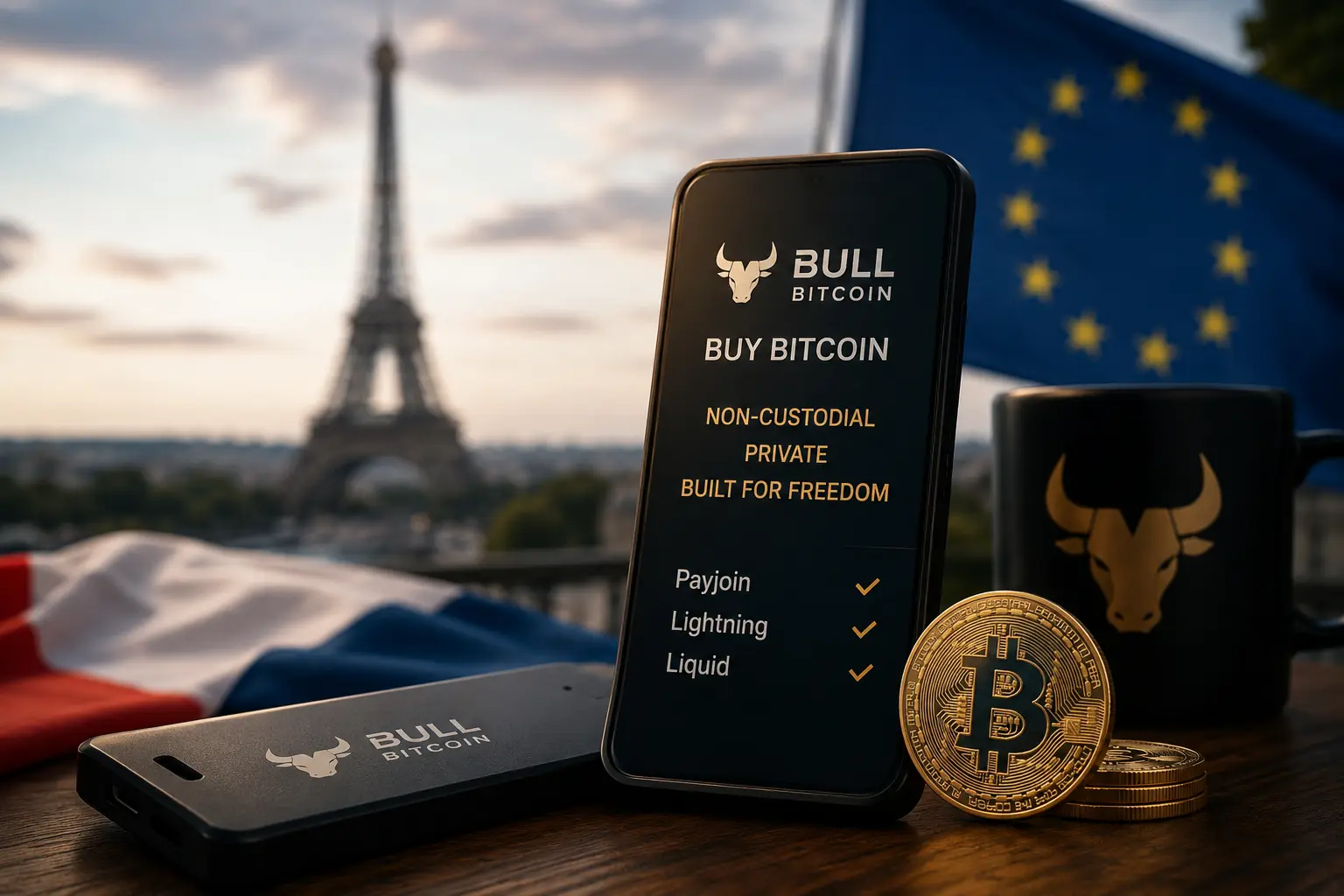
Montreal’s Bull Bitcoin has secured a MiCA license in France, keeping every privacy and self-custody feature intact. Founder Francis Pouliot announced the news on June 23, 2026, marking the end of a three-year, self-funded European push.
What the MiCA License Means for EU Users
For existing customers in EU member states, this is straightforward good news. Bull Bitcoin’s exchange and payment services will continue running without interruption, and users won’t face any new restrictions or extra compliance burdens. The company confirmed that all features on its website and wallet stay exactly as they were through the first half of 2026.
This matters because many crypto firms operating in Europe have had to restructure, restrict access, or pull out of certain markets entirely as the EU’s Markets in Crypto-Assets Regulation has tightened. Bull Bitcoin managed to thread that needle by working directly with France’s AMF regulator without compromising its core model.
How Bull Bitcoin Pulled Off the MiCA Compliance
The process wasn’t quick or cheap. Pouliot said the achievement came after a nearly three-year, self-financed effort, with no external investors or lenders brought in at any point. That’s a meaningful distinction in an industry where regulatory processes routinely push companies toward outside capital.
Bull Bitcoin also passed the required PASSI and DORA cybersecurity audits, and did so without outsourcing its core Bitcoin infrastructure to third-party hosted providers. According to Pouliot, leaning on external services would have been easier and cheaper, but it would have cost the company its operational sovereignty. They chose not to take that shortcut.
Pouliot described it as “a huge win,” and it’s hard to argue otherwise. Passing those audits in-house, with a self-funded team, while keeping all user-facing features intact is not the path most exchanges have taken.
A Bitcoin-Only, Non-Custodial Model Since Day One
Bull Bitcoin has operated as a Bitcoin-only, non-custodial exchange since Francis Pouliot founded it in Montreal in 2013. The setup is intentional: users supply their own wallet address before any purchase, and Bitcoin goes directly to their control. The company never holds it.
This cypherpunk philosophy shows up across everything Bull Bitcoin offers. Beyond buying and selling, users can pay bills directly in Bitcoin, covering rent, utilities, and real estate. The platform also supports Lightning Network, Liquid, and Payjoin privacy tools, all of which remain fully available under the new authorization.
The BULL Wallet Stays Fully Intact
In October 2025, the company launched the BULL Wallet, a global, open-source, privacy-first mobile app available on iOS and Android. It integrates directly with the exchange and was built with a firm stance on user data: no data collection, no push notifications, and full compatibility with Payjoin, Lightning, and Liquid.
The wallet and exchange integration remain unchanged under the new license. That’s exactly what users of this kind of platform want to hear. Keeping the Bull Bitcoin MiCA license aligned with the company’s non-custodial approach was the whole point of the effort.
Why This Outcome Stands Out in Europe Right Now
The timing of this announcement is significant. The full MiCA framework for crypto-asset service providers became applicable on December 30, 2024, with an EU-wide transitional deadline of July 1, 2026. Many firms used that window to decide whether complying was worth it. Some chose not to.
Bull Bitcoin chose to comply, and to do it on its own terms. According to Pouliot, the company’s experience handling Canadian regulatory oversight gave it a clear view of where it was willing to meet obligations and where it would push back against overreach. The EU licensing process aligned with that approach.
As of October 2025, over 40 CASP licenses had been issued across the EU under MiCA. Getting one while preserving full self-custody and privacy tooling puts Bull Bitcoin in a rare position among those licensed operators.
What Pouliot Says Comes Next for Bull Bitcoin MiCA
France is just the beginning. Pouliot was clear: this license is a foothold, not a finish line. The goal is a new global standard for Bitcoin infrastructure. Reaching users far beyond Europe is firmly in the plan.
That tracks with how far the company has already come. Starting as a Montreal exchange, it now runs a France-based team with eurozone services and an EU-passportable license. Canadian interest in Bitcoin is growing, as the Globe and Mail has noted. Bull Bitcoin’s non-custodial model stands apart from the custodial platforms leading that trend.
Bull Bitcoin MiCA Sets a Compliance Blueprint for Others
The wider takeaway from this story is that Bull Bitcoin MiCA compliance didn’t require sacrificing what made the company worth building in the first place. The cypherpunk approach, the in-house infrastructure, the direct custody model, none of it had to go.
Pouliot said it plainly: it’s possible to meet the highest regulatory requirements without becoming overzealous about it. That’s not a message you hear often from crypto firms navigating EU licensing, and it may be the most useful thing to come out of this announcement.
If you’re weighing which Bitcoin exchange to use for EU access or want a platform that keeps you in control of your own coins, this development is worth tracking as Bull Bitcoin continues its expansion.